

A lifetime of soundness isn’t built in the show pen, it’s built through hundreds of small decisions made long before your horse ever walks into the arena. Joint health is a long game, and the more intentional you are early on, the better equipped your horse will be to stay comfortable and confident as his workload grows. Whether your horse is a futurity hopeful, a seasoned ranch gelding, or your go-to trail partner, creating a long-term joint-care plan is essential.
Here’s how to think beyond today’s ride and invest in the longevity of every stride.
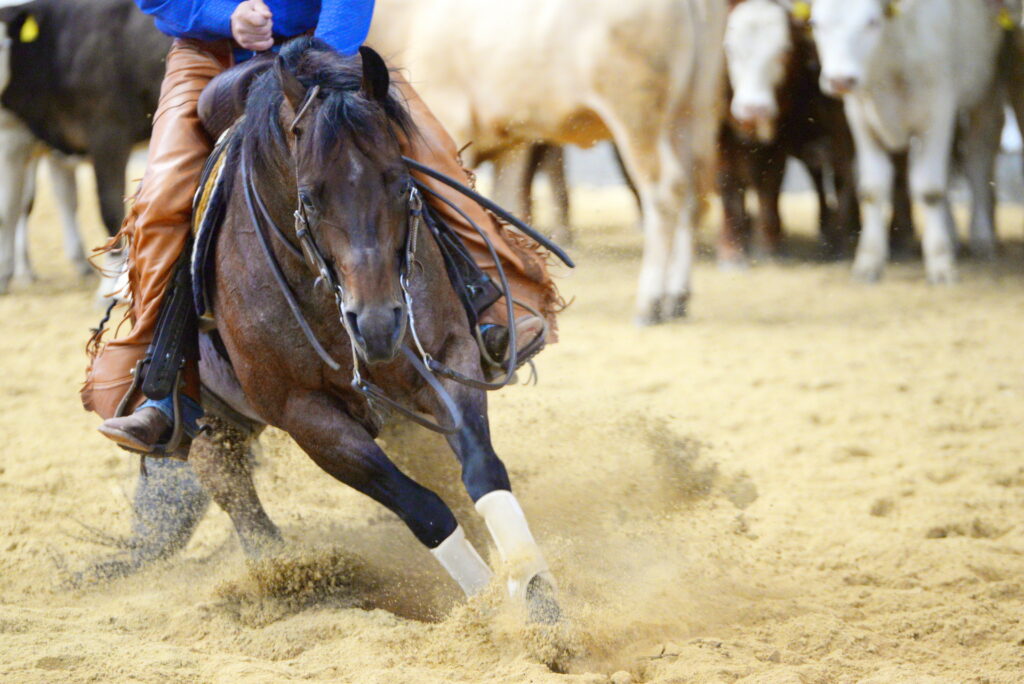
Build a Foundation of Healthy, Natural Movement
Horses were designed to move. That natural motion is the backbone of long-term joint health. Turnout encourages low-impact activity that keeps joints lubricated and tissues supple. The more your horse stands still, the more stiffness can accumulate, especially as he ages or when weather keeps him stalled longer than usual.
Once you’re in the saddle, structure your rides with longevity in mind. Start with a generous warm-up to help tendons, ligaments, and joints gradually transition from rest to work. As you increase intensity or introduce new maneuvers, do so over time. Joints respond best to consistency and gradual progression—not sudden leaps in workload or repeated drilling.
Optimize Movement Mechanics to Protect the Musculoskeletal System
In performance training, it’s easy to focus on the finished maneuver rather than the mechanics behind it. But long-term joint health relies heavily on how efficiently and correctly a horse moves. Balanced posture, symmetrical limb use, and proper alignment all help distribute force evenly through the joints instead of allowing one area to absorb excessive strain.
This foundation starts at the hooves. Correct, consistent farrier work establishes the angles and balance that support healthy limb loading. When the foot is aligned, the joints above it are better able to absorb impact without compensating, twisting, or overworking surrounding structures. Pair that with mindful schooling—varying direction, minimizing repetitive stress, and incorporating opportunities for your horse to stretch through his topline and soft tissues—to reinforce proper movement patterns.
Footing plays a critical role, too. Surfaces that are too hard, too deep, uneven, or slippery can increase joint loading and fatigue. Working your horse on safe, uniform, and well-maintained footing helps protect joint surfaces and soft-tissue structures, making it one of the simplest and most effective ways to safeguard long-term soundness.
Reduce Daily Joint Stress
Longevity isn’t just created during training—it’s shaped by your horse’s environment every day.
- Maintain a healthy weight: Excess pounds increase joint load with every stride.
- Provide joint-friendly stall surfaces: Concrete floors without mats can contribute to cumulative wear; good cushioning helps lessen impact.
- Give your horse opportunities to stretch and move: Even small periods of controlled movement—hand-walking, walking under saddle, or short turnout breaks—help keep joints comfortable.
Think Preventatively With Your Veterinarian
The most successful joint-care programs involve early and ongoing veterinary collaboration. Your vet can help you track subtle changes in movement, assess limb symmetry, recommend conditioning adjustments, and build an individualized strategy tailored to your horse’s lifestyle and workload.
This is also where targeted joint-support therapies come into play. One option your veterinarian may include in a proactive plan is Polyglycan, a patented formulation from Bimeda designed to replace lost or damaged synovial fluid—the lubricating fluid inside joints that enables smooth, comfortable motion.
Longevity Is a Mindset—Not a Single Step
Proactive joint care is a commitment, not a remedy. It’s the accumulation of thoughtful conditioning, smart training decisions, everyday management, and regular veterinary partnership. By taking steps today to support joint health, you help set the stage for years of comfortable riding.
A sound horse isn’t an accident. It’s an investment, and one that pays off every time you swing a leg over.