

If your horse has symptoms of osteoarthritis, it’s best to get him examined as soon as possible, as early identification can significantly improve care and maintenance.
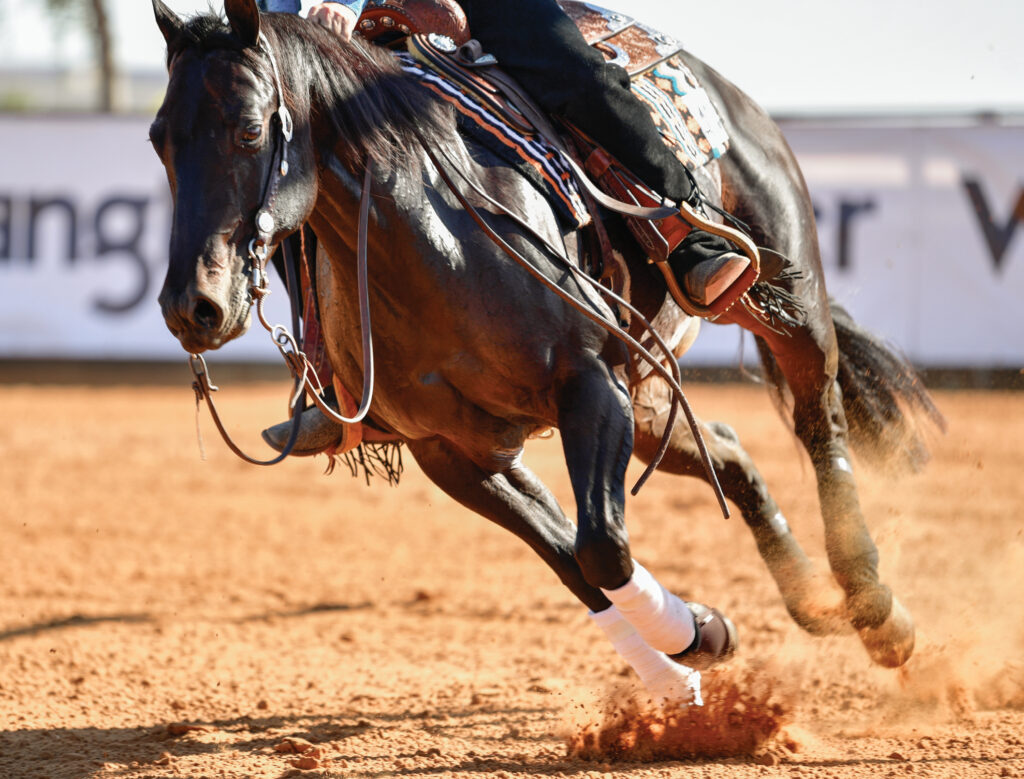
Osteoarthritis (OA) is a degenerative joint condition that occurs when the protective cartilage cushioning on the ends of bones wears down over time. Without this cushion, joint movement becomes painful and uncomfortable for the horse. While OA is more common in older horses due to cumulative wear and tear, it can affect horses of any age, gender, or breed. Performance horses are especially at risk, as high-impact maneuvers—like hard stops, tight turns, and quick accelerations—can lead to repeated joint trauma and strain.
Because OA is progressive, lameness is often the first sign. It may appear intermittently and worsen over time or come on suddenly. Even without clear lameness, your horse might seem stiff coming out of the stall but improve with movement. Over time, you’ll notice a reduced range of motion in the affected joints.
Identifying the Issue
If your horse has symptoms of osteoarthritis, it’s best to get him examined as soon as possible, as early identification can significantly improve care and maintenance. Even if you suspect OA, you’ll want to have your veterinarian complete an exam to confirm a diagnosis and rule out other causes of lameness. They’ll likely start with a lameness evaluation and x-rays, and if needed, will recommend imaging, such as CT, MRI, or a PET scan. Your vet may also recommend diagnostic arthroscopy. Either way, imaging will help your vet identify narrowed joint space, indicating cartilage breakdown, bony growths, or excess joint fluid, all of which are indicators of osteoarthritis.
How joint smart are you? Take our quiz to find out!
Prevention and Treatment
The development of OA can be slowed with diligent care. Prioritize conditioning by preparing your horse’s muscles, joints, ligaments, and cartilage for the demands of his discipline. And be mindful of where you ride, choosing maintained surfaces with adequate cushioning.
If your horse has a confirmed OA diagnosis, there are still measures you can take to keep them comfortable and rideable.
Injections
Corticosteroids and hyaluronic acid are commonly injected directly into affected joints to reduce inflammation, improve lubrication, provide relief, and enhance joint function.
Medications
Non-steroidal anti-inflammatory drugs (NSAIDs) like phenylbutazone (bute) and firocoxib can be used to manage pain and reduce inflammation in joints.
Rehab
Controlled exercise through physical therapy or rehabilitation can improve joint mobility and strengthen supportive musculature to reduce lameness and prevent further joint deterioration.