

When it comes time to compete, you need to be able to communicate with your horse using the subtlest of cues. This is why I love having non-pro riders include my “Follow My Gaze” drill into their daily riding routine. Read on to learn how you can use your eyes to improve your connection with your horse and ace your maneuvers in the show pen.
The idea is simple. In this exercise, your horse learns to follow what you’re looking at. But it’s not just your eyes he’s following; it’s your whole body. When you shift your focus, even slightly, your horse should feel that change in your body position and respond to it.
It might take some time for your horse to fully understand where you’re asking him to go, but the more you incorporate this drill into your riding routine, the more in tune your horse is going to become with these subtle shifts in body position, and the more confidently he’ll be able to respond.
While this kind of connection is useful in everyday riding, it’s going to show up in big ways in the show pen. If my horse can follow my gaze, he’ll be able to confidently work a cow or prepare to go over a difficult trail class obstacle because he’ll know where I’m trying to go, or what cow I’m trying to work.
READ MORE: Boundaries, Body Language, and Better Rides
1. Check Your Horse’s Focus
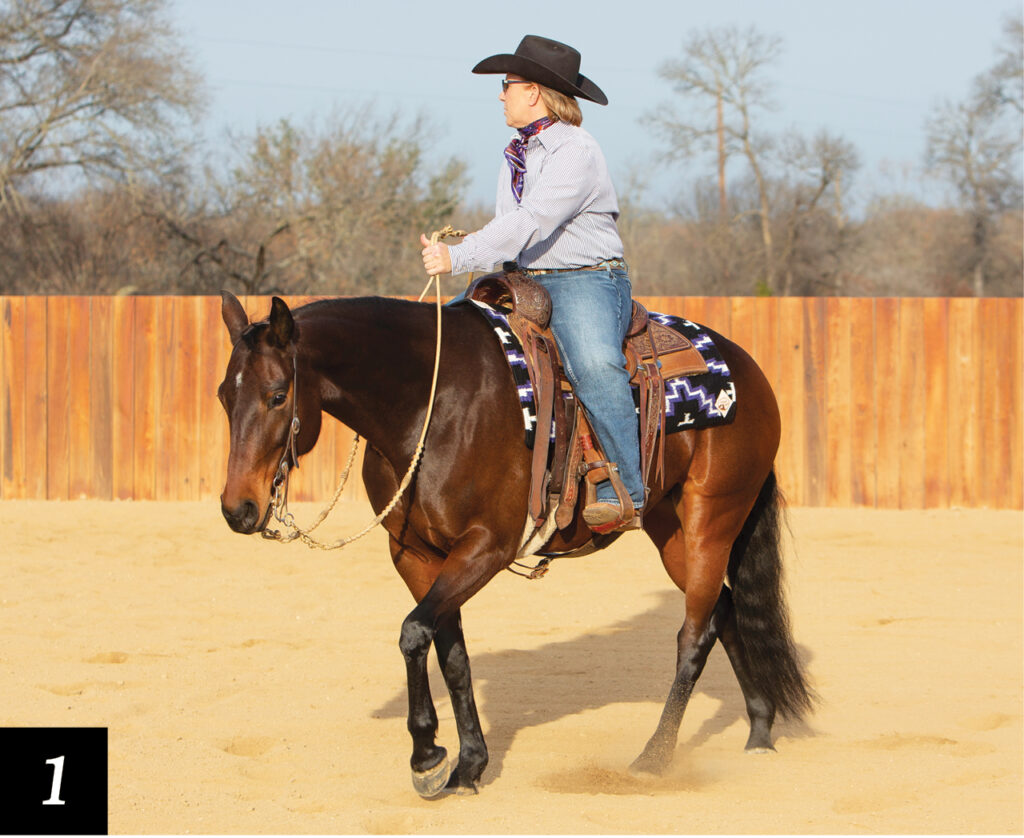
The first thing I do when I get on is check in with my horse to see where she’s at. Once I’m in the saddle and ready to ride off, I leave my hand really still, and squeeze both legs with even pressure. I try to focus on a target—it could be a fence post, a banner, a cone, etc.—and see where my horse travels. Most of the time, she’ll do something like what she’s doing in this photo, where I’m looking one way, while she’s looking, and walking, in another direction.
My gaze isn’t the only thing that signals where I’m wanting to go. When my head turns, you can see that my torso also moves. The pressure from my left hip and thigh also changes. If my horse was in tune with what I was asking, the pressure change in my hip and thigh would indicate a change in direction.
2. Bring Your Horse Back on Target
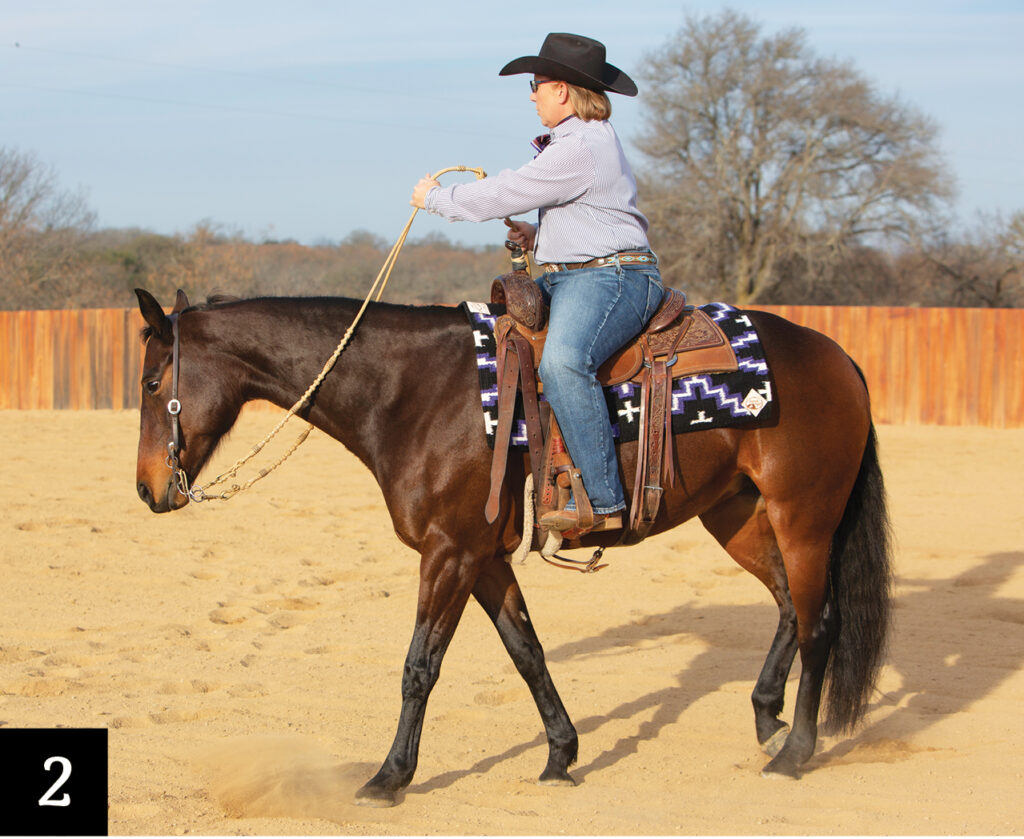
The correction is simple. If she doesn’t follow my gaze, I lift my rein hand and use the neck rein to apply pressure to her neck. I then squeeze my left thigh or calf until she turns and travels toward my intended target. Afterward, I quiet my hand and sit balanced in the saddle and see if she’s now locked in on where I want to go.
3. Look the Other Direction
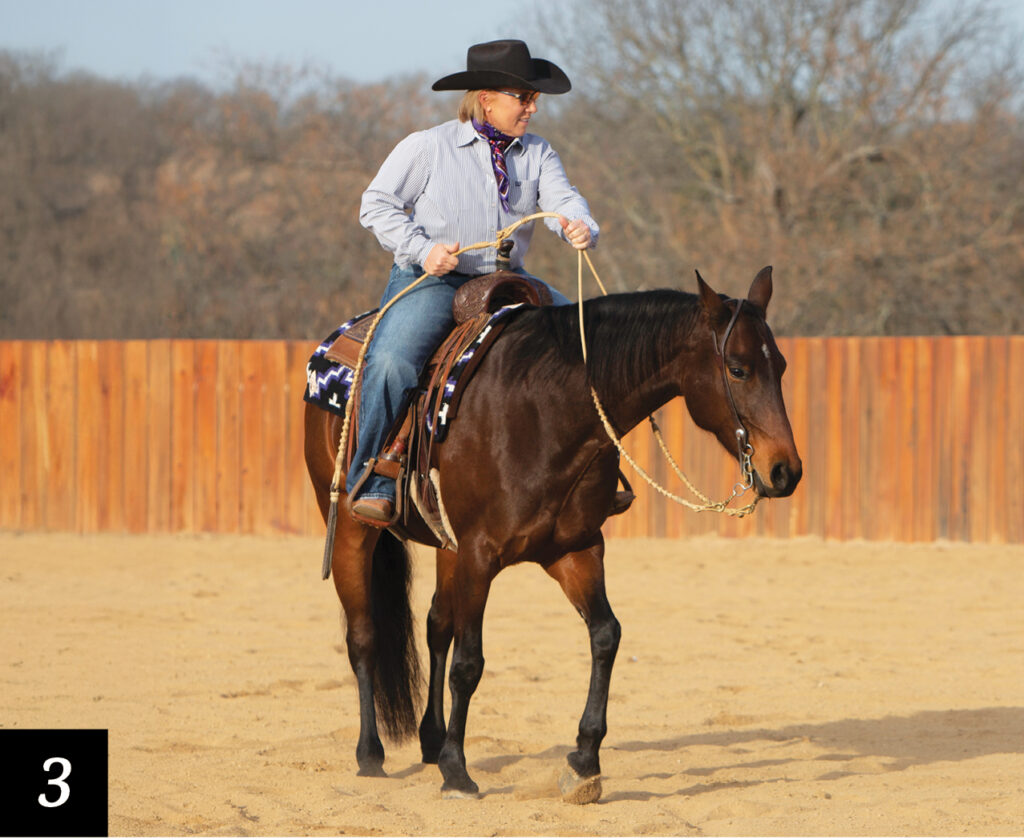
This time I’m going to look at a point the opposite direction. My horse is starting to lock in, so I don’t have to use as much rein to steer her, and she responds to the pressure of my right thigh that naturally happens when I turn my head and torso to the left.
READ MORE: Routines to Bookend Your Ride
4. Find a Spot in the Sand
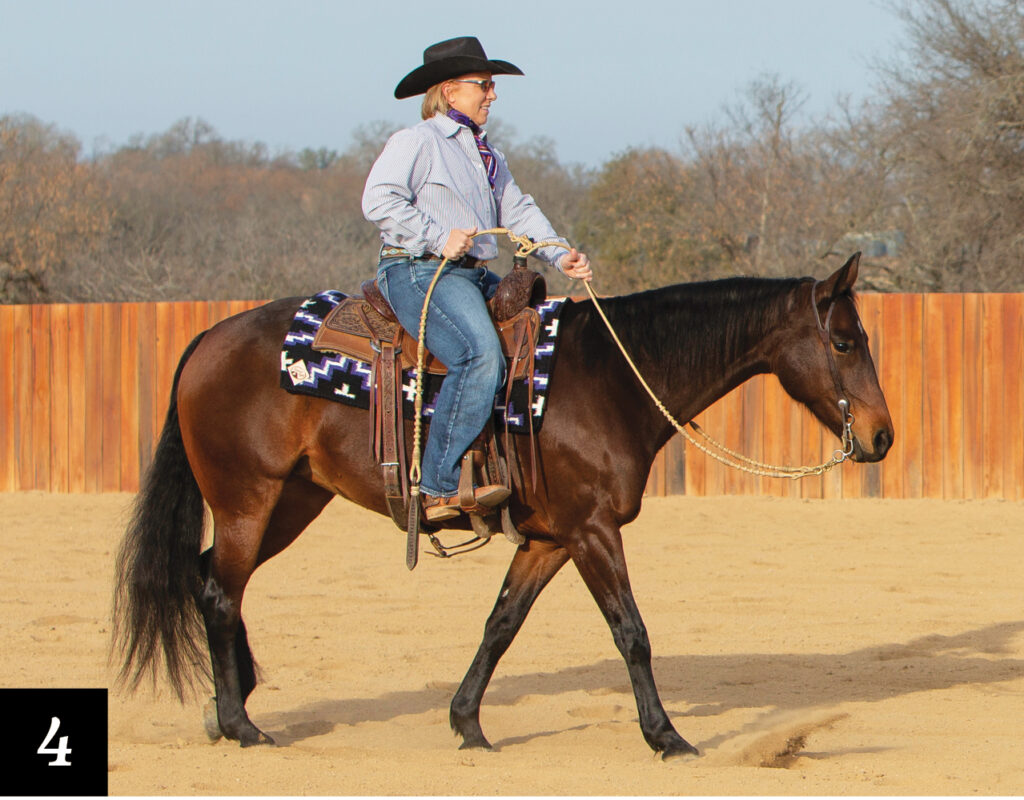
Now I’m going to pick a divot that’s in the ground and go directly to it. My horse looks much more connected here. Her ears are forward and she’s looking the same direction I am. I don’t have to use much rein to guide her, as she’s paying attention to what my body is telling her to do.
5. Reward
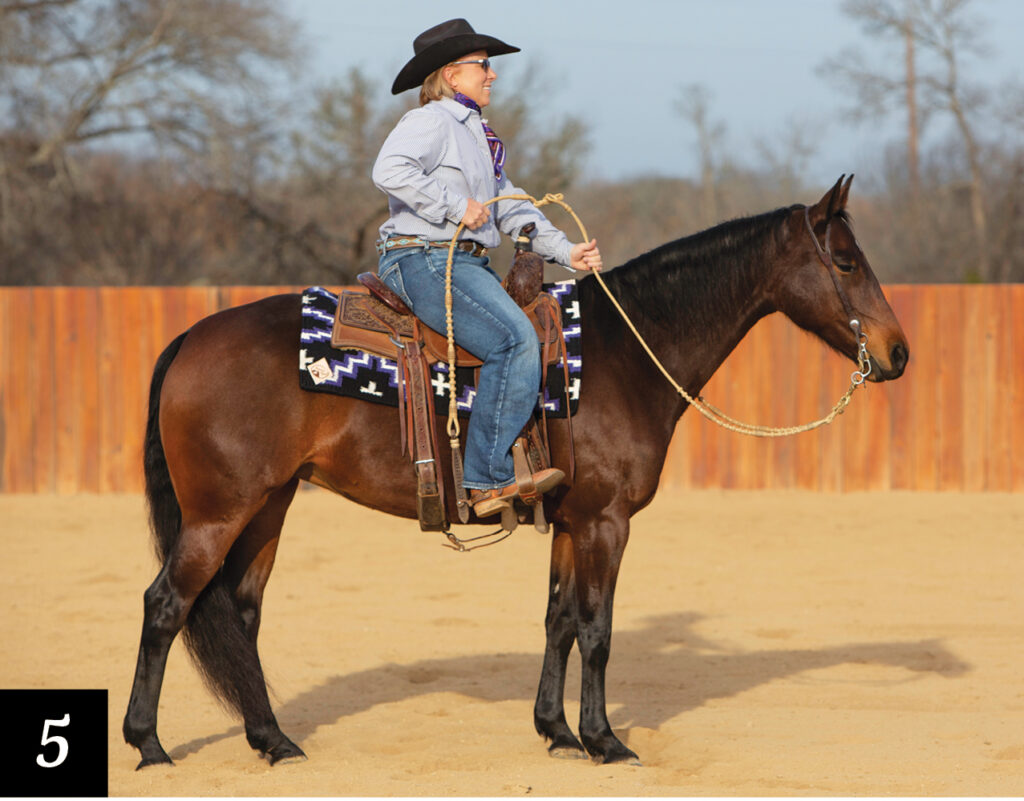
I reach the divot in the ground I was aiming for, so I ask for a stop, give her a pet, and then let her stand as a reward for going where I want. Once she’s following my gaze, I might even try to make it more difficult by trying to have her place a certain front foot in the divot I’m aiming for in the dirt.
6. Stay Centered
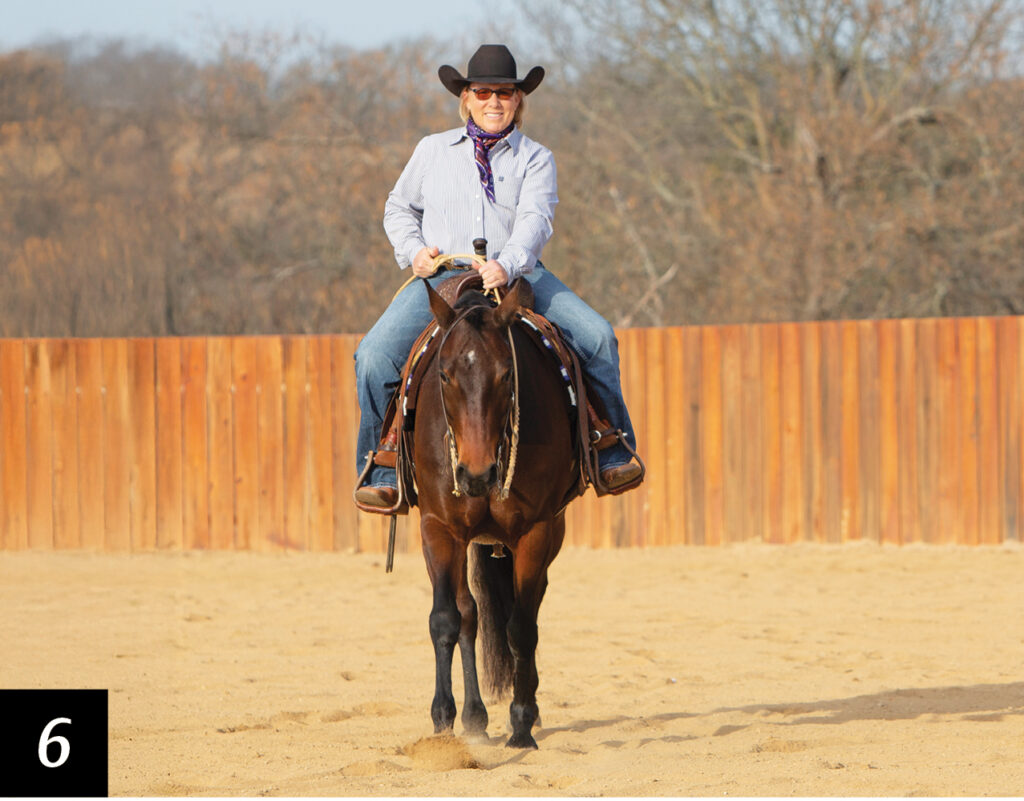
Don’t forget the importance of sitting in the center of your saddle! Every rider has a dominant leg—just like every horse has a dominant side. If you ride with uneven stirrups or like to shift your weight into your left or right leg, your horse is going to struggle with staying balanced. In this photo you’ll notice I have more of my weight shifted to the right side of my saddle, which means there’s going to be more pressure on my right thigh and right hip. That’s going to make it harder for my horse to travel in a straight line.
READ MORE: Ranch Riding Trot Logs
—H&R—