

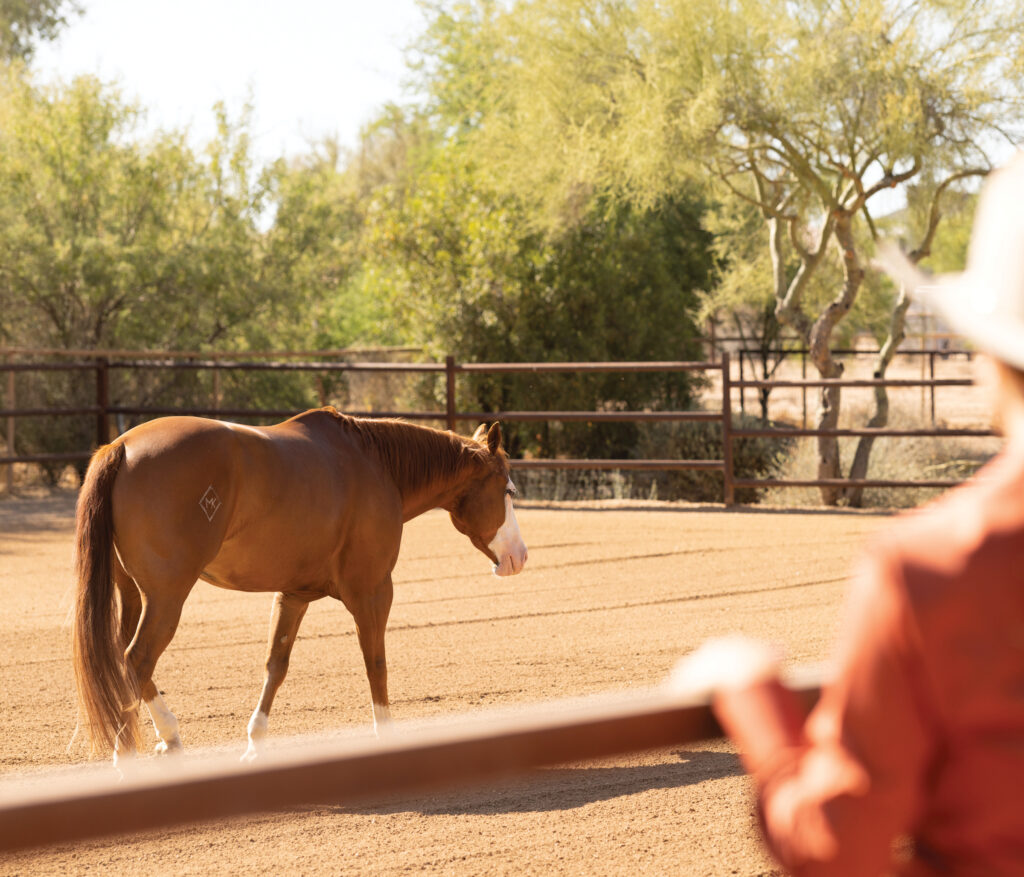
Have you ever heard this one?
One sock, buy him
Two socks, try him
Three socks, doubt him
Four socks, do without him!
Yep. It’s true. Old time horsemen were known to advise against purchasing a horse with four white socks. Why? Because white socks meant white feet, and white feet were “weak.” Of course, these days, any horse you purchase is likely to be subjected to a thorough prepurchase examination, including not just a physical exam but also radiographs and maybe even ultrasound or MRI. And guess what? There’s been many a successful high-level performance horse with four white feet. So if you wouldn’t turn to ancient advice when purchasing a horse, why would you depend on worn-out traditions to help you manage him once you bring it home?
The horse world is steeped in tradition. And horse people are generally the first to offer you advice. “Don’t let your horse drink water after work—he’ll colic,” or “never ride your horse without boots on to protect his legs.” My personal favorite? “Horses can’t eat alfalfa.”
Do you find yourself doing things to care for your horse just because you’ve been told it’s the only way? If so, you might be surprised to learn that some of those traditions are nothing more than stories that have been passed along from generation to generation, with no basis in fact. In fact, some of these traditions can even do more harm than good.
In this article, we’re going to look at some of the most prevalent, and hard to combat, health care traditions that persist in horse barns everywhere. We’ll learn what they are, why they’re wrong, and, perhaps most important, what you should do instead.
How to Care for a Wound
The tradition: By the time you discovered the wound on your horse’s cannon bone, it was way too late to call the vet. Old wounds can’t be sutured. Start by cleaning the wound with betadine to make sure it doesn’t get infected. And to combat the moist, pink, fleshy tissue that’s forming on the surface of the wound, put this specially concocted wound dressing on it to help dry it out.
Why it’s wrong: It’s a commonly held misconception that a wound that’s more than 12 hours old can’t be sutured. It’s just not always true. In some situations, your vet can clean up the wound with some judicial trimming and still suture it closed, even after many days have passed. Expensive? Perhaps. But a sutured wound will generally heal better and more quickly than one that’s left open to close on its own. Even if a wound really can’t be sutured because proud flesh has gotten out of control, your vet can trim that tissue back to help with healing. The cost of suturing or trimming back unwanted tissue may even be less expensive than what it takes to manage an open, untreated wound that takes forever to heal.
Betadine is another common, and potentially detrimental, wound care tradition. Betadine is damaging to tissues, and scrubbing or flushing a wound with betadine will only make things worse. While a wound may be contaminated with dirt and debris, it most likely won’t become infected, meaning a heavy-duty antimicrobial like betadine simply isn’t necessary.
Finally, what about the “wonder wound” concoctions you find around the barn? Many of them are designed to cauterize the tissues and will only make things worse. The same holds true for letting a wound dry out. Simple fact? Wounds prefer moisture, and they’ll heal better, and faster, in a moist environment.
What to do instead: Clean the wound with saline solution and call your vet! Allow your vet to suture the wound if they think they can, or trim back any unwanted tissue that’s likely to interfere with healing. Whether or not they treat the wound, your vet can provide or recommend an appropriate wound dressing. If they’re concerned about infection, they may recommend a topical antimicrobial ointment, and in cases where proud flesh has gotten out of control, judicious use of steroids might be a part of the plan. Finally, keeping a wound covered with a bandage will help it heal.
How to Protect Your Horse’s Legs During Work
The tradition: Never work your horse without protecting his legs, especially if he has any kind of conformation that might stress his tendons or ligaments. If you can, use boots that are specially designed for support. If those aren’t in your budget, polo wraps can be an excellent choice.
Why it’s wrong: The data is in. Studies have shown that boots marketed to support your horse’s lower legs don’t always provide the right kind of support. Exercise boots or bandages have been demonstrated to increase the temperature of a horse’s soft tissues, creating a higher risk for injury. In fact, polo wraps resulted in the greatest increase of temperature and humidity.
What to do instead: Does this mean you should never use boots at all? Not necessarily. If your horse tends to interfere, you’re performing over obstacles, competing in events like reining or reined cow horse, or you’re trail riding through areas where your horse might be subjected to physical trauma, protective boots can be very beneficial. But you should use them judiciously. Look for boots that have openings that allow for airflow and consider skipping boots on very hot days—especially if your horse is not prone to interference. If it’s hot and you do use boots, think about making it an easy ride, and take the time to cold hose your horse’s legs after work to cool them down.
How to Cool Your Horse Out After Work
The tradition: When your horse is hot, it’s important to cool him carefully. Never hose him down with cold water or he’ll get crampy. Use warm water instead, and make sure you scrape of all the water after hosing. Put a cooler on him so he doesn’t cool too quickly, and whatever you do, don’t let him drink cold water after work or he is sure to colic.
Why it’s wrong: Rapid cooling really doesn’t cause a problem. In fact, if your horse gets over-heated, the faster you can cool him down the better. Evaporation is a very important part of your horse’s cooling mechanism, and removing all the water with a sweat scraper and putting on a cooler at the conclusion of a cooling session will simply prevent evaporation and slow things down. Finally, there’s no evidence to support the old-wives-tale that claims a horse will colic if he drinks cold water when he’s hot.
What to do instead: If your horse is thirsty and willing to drink, consider yourself lucky! Allow him to drink as much as he will. It’s also completely acceptable to hose your horse down with cold water after work. If your horse is sensitive to cold water, consider focusing your cooling efforts on his chest, neck and between his hind legs where the biggest blood vessels run. You can always wash his back with warmer water after he has cooled down.
The ideal strategy for cooling is to hose your horse with cold water and scrape it off in cycles until the water you are scraping away feels cool. The heat from the surface of your horse’s body will transfer to the water with each round of hosing through the process of conduction—another of his important cooling mechanisms. For your final round, leave the water on his body to allow for final cooling through evaporation. And leave the cooler behind. It simply prevents evaporation and hampers his ability to cool.
How to Feed Your Horse
The traditions: Never, ever feed your horses alfalfa. It’s way too high in protein and will burn up his kidneys. Not only that, but it’ll also make him hot.
Why it’s wrong: While it may be true that alfalfa can be a problem for some horses with kidney disease, there’s absolutely no basis to the claim that it causes kidney damage in an otherwise healthy horse. And although alfalfa may give your horse energy by providing him with needed nutrients, it really won’t make him hot. In fact, if anything is likely to make your horse hot, it will be a ration that consists of a large amount of unnecessary cereal grains.
What to do instead: There are a lot of advantages to including some alfalfa in your horse’s ration—starting with its higher protein content. Many other types of hay are low in protein—some don’t even provide an adequate amount to meet a horse’s basic needs. And unless you have had your hay analyzed, there’s often no way to know. By adding alfalfa to your horse’s ration, you can have confidence that his basic protein needs are met. And that’s not all!
Many people don’t realize that, on average, alfalfa also tends to be lower in carbohydrates than many other hays. If you have a horse with metabolic syndrome that requires a low carbohydrate hay, adding alfalfa to his ration may be something to consider. However, alfalfa also has a higher calorie count than other hays, meaning for an obese horse with metabolic syndrome you’ll have to balance calories with carbohydrates.
Alfalfa also wins big when it comes time to manage gastric ulcer syndrome. If your horse is at risk for ulcers, alfalfa will be a recommended addition to his diet. The high calcium content of alfalfa hay can help buffer stomach acids. Specifically, feeding your horse a small amount of alfalfa before a training session will not only help buffer the acids, but it’ll also act as a physical mat that soaks up those acids and prevents them from splashing around during work, a scenario that is particularly problematic for some hard-working horses.
Do you have a horse with kidney disease? An obese horse? Or a horse with Hyperkalemic Periodic Paralysis (HYPP)? It’s true that alfalfa might not be an ideal option for horses with some conditions. If you believe your horse fits into one of these categories, consult with your veterinarian about whether it’s safe to include alfalfa in your horse’s ration.
How to Manage an Infection
The tradition: Your horse has fever or a snotty nose. It’s best to start him on antibiotics right away. It won’t hurt anything, and it will prevent him from getting worse. Thank goodness you have a bottle of SMZs sitting in your tack room.
Why it’s wrong: Chances are a fever or a snotty nose is due to a virus, and antibiotics won’t help. This is true even if the snotty nose is thick or creamy. In fact, a thick nasal discharge is more likely to be the result of inflammation than infection.
Why is this important? Antimicrobial resistance (AMR) is becoming increasingly widespread. In fact, the World Health Organization has named AMR as one of the most significant threats to human health worldwide. How is it happening? Because of misuse—specifically overuse—of antimicrobials in both humans and animals.
If threats to global health aren’t enough, it’s also important to recognize the danger of thinking “it won’t hurt anything” when you reach for unneeded antibiotics. Antibiotics can lead to complications—even life-threatening ones. It’s best to save them for when they are really warranted.
What to do instead: If you’re concerned about a possible bacterial infection, call your veterinarian. If they share your concerns, they’ll most likely recommend doing lab work or taking samples to confirm bacterial involvement. If bacteria involvement is suspected or confirmed, your vet can help determine what antibiotic would be best. Ditch the tradition of just reaching for the bottle that happens to be sitting on the tack room shelf. It can do more harm than good.
The truth is, there are plenty of traditions in the horse world that are not only outdated but might be harmful. And just because “we’ve always done it this way” doesn’t mean we should. After all, that horse with four white socks? He just might be the one you’re waiting for.
—H&R—